


Step-by-step Guide to Knotting a Wig
The Little Princess Trust turns hair donations from its supporters into wigs for children and young people. Holly Rivers, one of the charity’s wig knotters, here explains how the wigs are made.
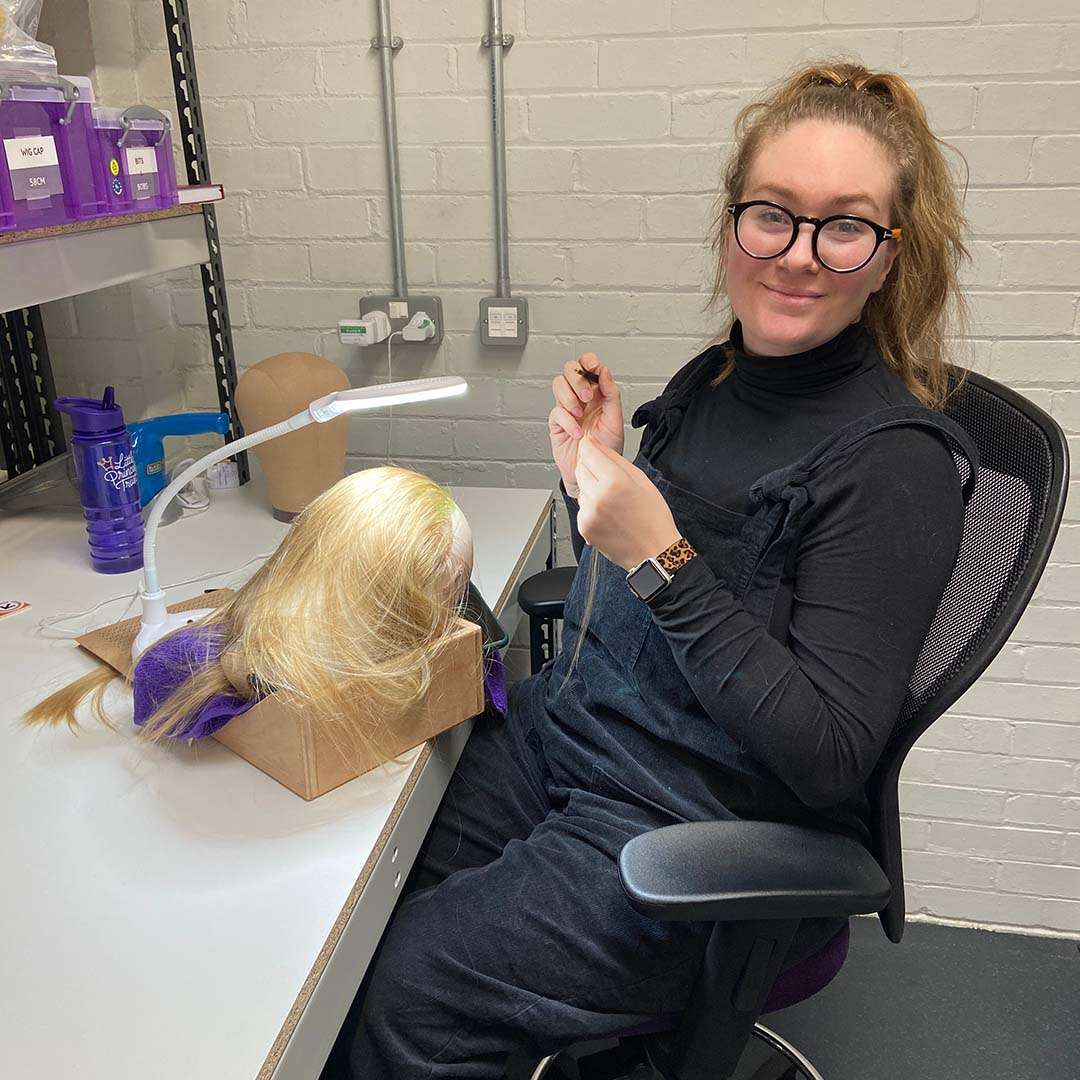
The Four Key Stages
- Using the wig block
Hair is knotted into a wig base (also known as a wig cap or foundation) and a wig block is used to hold the base in place.
Picking the correct size wig block is important and sometimes it is necessary to pad out the wig block to make sure it is a good fit.
We can pad the block out with cork or cotton wool to fit the shape of our base. Fine pins are then used to keep the wig base in place.
- Preparing the hair
We use around 160 grams of hair in each of our wigs. The hair is put in drawing mats, this ensures all our hair stays neat, secure and most importantly all in the same direction.
It is key to keep the hair in the same direction as the hair has cuticles (a bit like fish scales) and if some strands of hair are knotted root first and others ‘end first’ then they will rub against each other and cause the wig to mat.
- The knotting process
We use both single knotting and double knotting in our wigs. Single knots are smaller, flatter and we use them in the more visible places like hairlines, temples and partings.
Double knots are essentially knotted in twice. This makes them more robust but the knots are more visible so these would be used in the back of the wig.
Knotting involves turning the root of the hair over an inch or so to make a loop and using your hook to go through the lace on the base of the wig and make a nice strong knot.
- Follow the map
To ensure consistency, we knot all our wigs in the same way. This helps wig fitters as they know what to expect from us.
We follow a plan – or map – so we know which direction to knot and the type of knot needed when knotting hair to the wig base.
The Little Princess Trust provides around 2,000 wigs every year to children and young people with hair loss. Visit www.littleprincesses.org.uk to find out how you can help the charity.


