


The New Normal
As the freelance economy expands, more beauty professionals are opting to work independently, rather than as full-time employees. With the help of industry experts, we explore how this shift is changing the ways salons operate, and how both models of employment can work together in perfect harmony.
The landscape of the UK hair and beauty sector is a complex one, with a unique blend of self-employment models and more traditional setups. More recently, as a post-pandemic shift, we have witnessed an increased number of professionals opt to go freelance due to the increased choice and freedom. However, with clear benefits and challenges on both sides, professionals guide us on how to make the amalgamation of both a success, and we lean into co-working salons as an alternative route.
While traditional salons remain vital to the industry, managing a harmonious environment with both staff and freelancers presents unique challenges within a traditional salon model. Sheila Abrahams, Founder of The Freelance Hairdressers Association (FHA), discusses how freelance is dominating the industry, saying, “From what I am able to see, freelance workers account for 60% of the industry versus 40% for traditional salons. This flip in working models means that we must all work together to ensure the industry moves forward as a whole, recognising that solutions won’t be immediate.”

Attributing the rise in freelance workers to Covid acting as the final push to prompt many hairdressers to transition to the freelance model, Sheila noted, “With salon closures becoming common due to the impact of the pandemic, individuals were driven to explore alternative employment. People had time to take a step back and look at what was important. As an industry, we are individuals who are known for saying yes to everything; the time allowed us to put ourselves first, enabling career development on the individual’s terms.”
With this in mind, the rise in freelancers has stemmed from a position of need, rather than an initial urge to move away from the traditional salon environment, yet it is definitely a change that is here to stay. Looking at how to integrate freelance workers into a salon environment requires thorough consideration and careful execution. Sheila encouraged, “For freelancers to work within a salon setting, they must operate as independent businesses, and it is crucial to establish such arrangements with careful consideration and transparency.
“Open and honest communication between freelancers and salon owners is crucial. This will help to avoid misunderstandings and ensure a fair, mutually beneficial and sustainable working relationship. Ultimately, the success of this model hinges on a commitment to ethical practices and a shared understanding of the unique needs and expectations of both freelancers and salon owners working together.”
With freelance workers bringing an array of benefits, such as fresh perspectives, new techniques, and a focus on a more personalised service, leading to higher customer satisfaction and retention, there are undeniably some factors that have a tendency to get overlooked. Sheila noted a continual problem in the industry, namely ‘disguised employment,’ the issue that arises when freelancers rent a chair, but get treated like employees without the benefits. Sheila continued, “If the salon dictates freelancers’ hours, prices or clients, that’s not a genuine freelance arrangement. When renting a chair, you should set your own prices, have your own clients, handle your own payments, and be a separate business in every sense. If the salon dictates your schedule, clients or income, you might be caught in disguised employment.”
With renting a chair and employment having their own complications, this gives rise to the phrase on everyone’s lips—the co-working salon. The essence of a co-working salon is to offer a workplace specifically designed for a certain trade, providing a lower-cost solution for hair and beauty professionals who want to work for themselves. Speaking to Boo Banner-Eve, Founder of Crown Works Creative Freelance Studio, we discussed the benefits of co-working environments, and Boo shared, “Overall, the energy in the space feels better. There’s little to no toxicity; the competition, if any, is healthy, and the space as a whole feels completely supportive, as no one is undercutting anyone.”
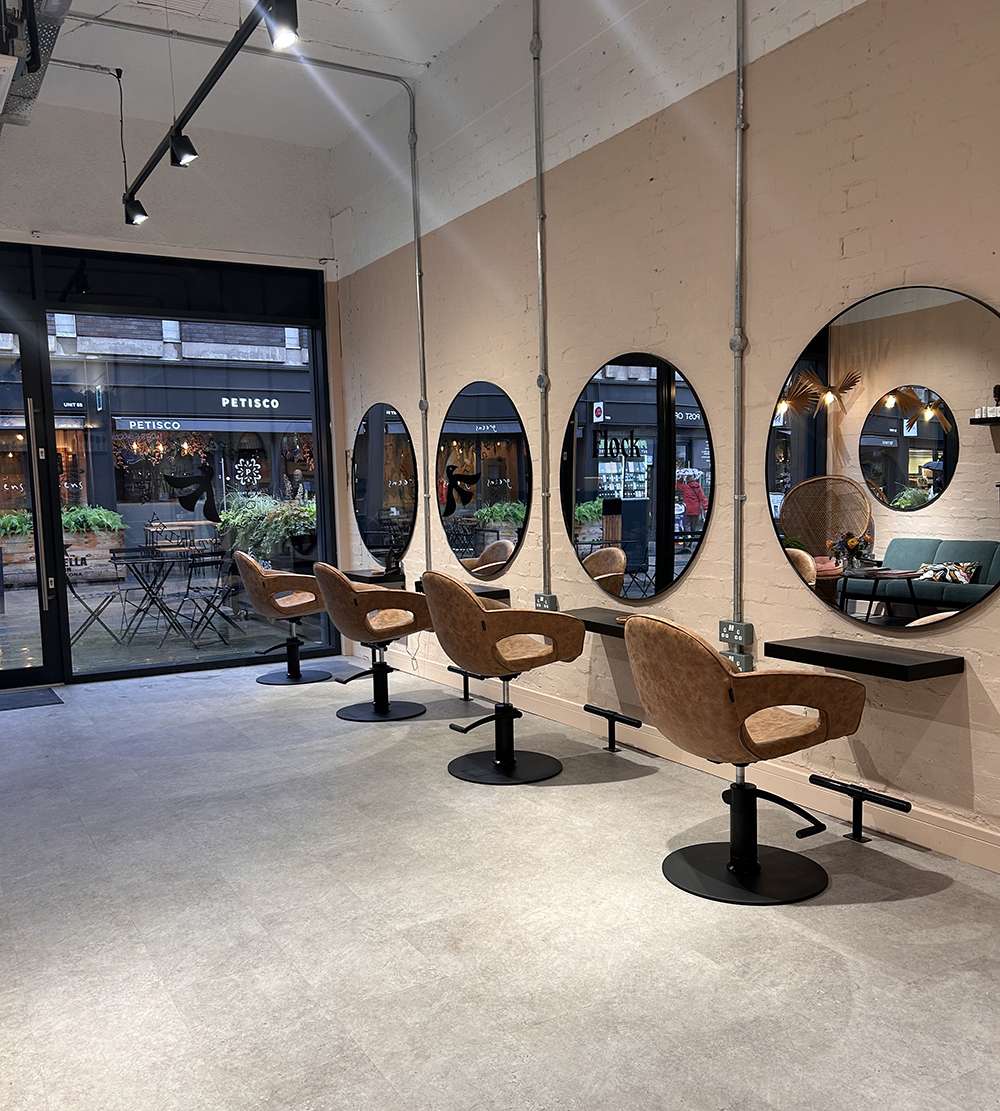
Fellow freelance salon owner, Charlotte Dobson, director of Flock, a co-working salon, noted the challenges with having freelancers in the salon, and shared, “It’s important to ensure all freelancers fit in with our brand and have the same work ethic as we do. All our freelancers have good clientele and are trained to a high standard. I always still trade test new freelancers, as we want to maintain a high standard within the salon.”
Looking to the future, Charlotte does not see co-working salon hubs going anywhere soon, as she shared, “Moving forward, I think it’s only going to be beneficial to move towards having a freelance team due to the difficulties employers are currently facing.”
Boo supported this notion, as she highlighted, “It is very evident that co-working salon environments are growing and traditional salons are changing their business structures to cater to this. There will always be a chunk of us who want to manage our own money and time, but there will also be others who favour the traditional environment.”
With multiple routes of employment in the hair and beauty industry, it is vital for employees to find one best suited to them. The traditional salon model is not going anywhere anytime soon, due to the nature of the industry, yet it is important to have practices in place to offer and support the freelance model, to open your doors to fresh perspectives, new skills and a wider client pool!


